Marine Fish-Derived Bioactive Compounds: Nutritional Pathways Toward Human Health Benefits
Journal Review
DOI:
https://doi.org/10.61741/JMBI.2026.v4.p82-90Kata Kunci:
Marine bioactive compounds; Omega-3 fatty acids; Bioactive peptides; Functional foods; Nutraceuticals.Abstrak
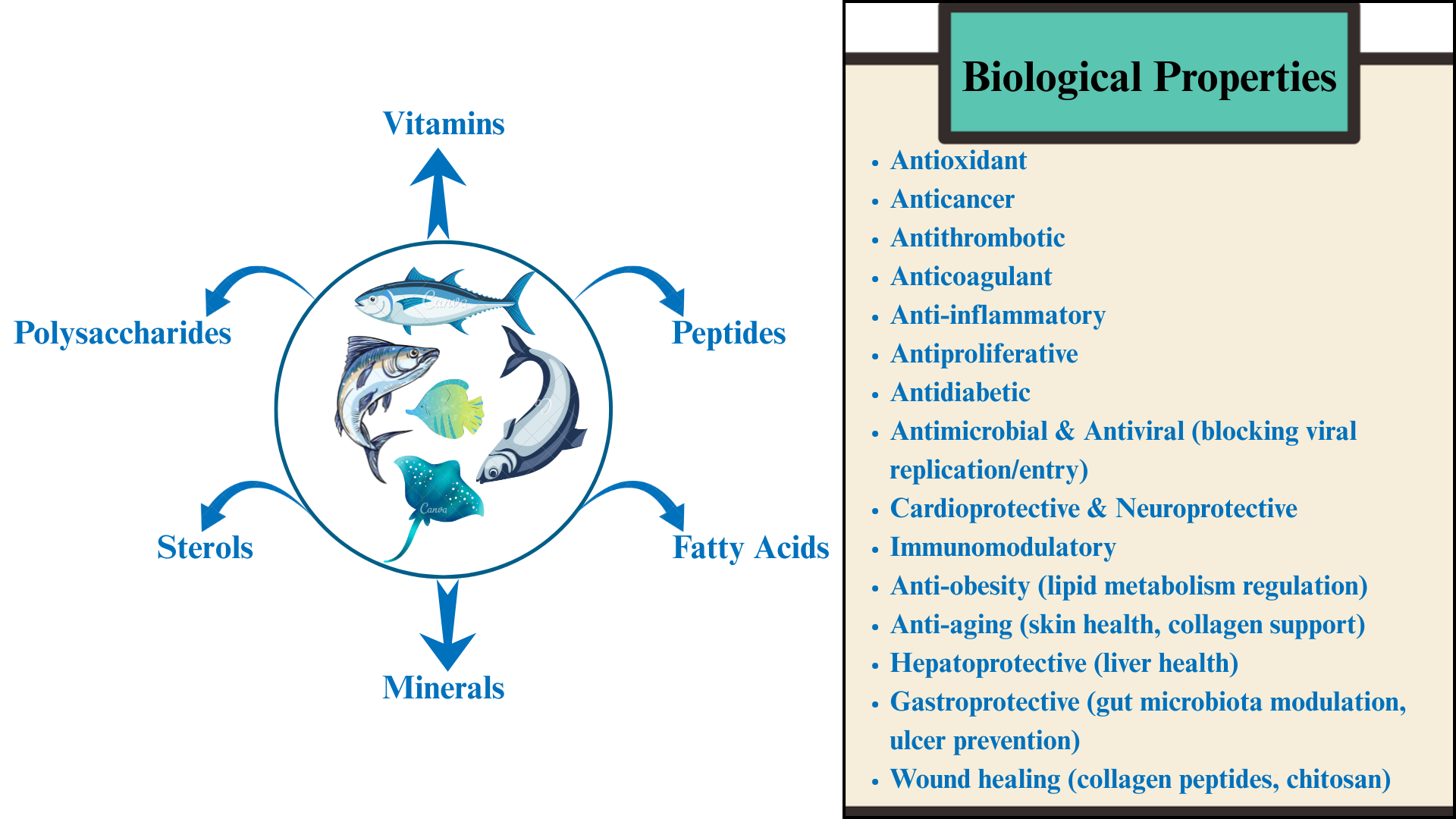
Marine fish-derived bioactive compounds have emerged as pivotal agents in bridging nutrition and therapeutic innovation, offering multifaceted health benefits through anti-inflammatory, antioxidant, and metabolic regulatory mechanisms. This review synthesises current evidence on omega-3 fatty acids (EPA/DHA), bioactive peptides, polysaccharides, and micronutrients from marine fish, emphasising their roles in modulating critical pathways such as PPAR activation, Nrf2-mediated antioxidant responses, and gut microbiota interactions. These compounds demonstrate efficacy in mitigating chronic diseases, including cardiovascular disorders, diabetes, obesity, and cancer, while addressing nutrient deficiencies (e.g., vitamin D and selenium). However, challenges persist in optimising bioavailability, standardising extraction protocols, and validating clinical efficacy, necessitating advanced technologies like nanoencapsulation and omics-based approaches. The integration of fish bioactive compounds into functional foods aligns with global trends in preventive nutrition; however, sustainability concerns highlight the need for scalable aquaculture practices and the valorisation of underutilised species. Emerging research underscores the potential of AI-driven discovery, biotechnological production, and circular economy strategies to enhance therapeutic accessibility and ecological sustainability. This work provides a comprehensive analysis of molecular mechanisms, translational applications, and regulatory considerations, offering a roadmap for future studies to bridge preclinical findings with commercial and clinical implementation. By addressing existing gaps in dose-response relationships, long-term safety, and synergistic effects, marine fish bioactive compounds can solidify their role in personalised medicine and sustainable food systems.
Highlights- Marine fish-derived bioactive compounds link nutrition with therapeutic innovation.
- Omega-3 fatty acids, peptides, polysaccharides, vitamins, and other marine metabolites support health through multiple biological pathways.
- These compounds can help correct nutrient deficiencies while also reducing the risk of chronic diseases.
- Functional foods and nutraceuticals are promising delivery routes, but bioavailability and clinical validation remain major challenges.
- Sustainable production, standardised processing, and interdisciplinary research are essential for future translation.
Unduhan
Referensi
Ahmed, M., Verma, A. K., & Patel, R. 2020. Collagen extraction and recent biological activities of collagen peptides derived from sea-food waste: A review. Sustainable Chemistry and Pharmacy, 18, 100315. https://doi.org/10.1016/j.scp.2020.100315
Akinbomi, J. G., Abdulkareem, Y. T., & Adesina, O. 2025. Process parameter influence on chitin yield from tilapia fish scales: A statistical approach. International Journal of Research and Innovation in Applied Science, 10(3), 184–198. https://doi.org/10.51584/IJRIAS.2025.10030013
Al‑Hussaniy, H. A., Mahan, S. J., Redha, Z. M., Al‑Khalidi, A. H., & Al‑Dulaimi, A. A. 2025. Marine‑derived bioactive molecules as modulators of immune pathways: A molecular insight into pharmacological potential. Pharmacia, 72(1–10), e141923. https://doi.org/10.3897/pharmacia.72.e141923
Alijani, S., Hahn, A., Harris, W. S., et al. 2025. Bioavailability of EPA and DHA in humans – A comprehensive review. Progress in Lipid Research, 97, 101318. https://doi.org/10.1016/j.plipres.2024.101318
Allen, L. H. 2008. Causes of vitamin B12 and folate deficiency. Food and Nutrition Bulletin, 29(2 Suppl), S20-S34; discussion S35-7. https://doi.org/10.1177/15648265080292S105
Amiri, H., Shabanpour, B., Pourashouri, P., et al. 2024. Preparation of functional supplement powder using nanoliposome-containing marine bioactive compounds. Journal of Food Science, 1-15. https://doi.org/10.1111/1750-3841.17543
Andersson, M., Karumbunathan, V., Zimmermann, M. B. 2012. Global iodine status in 2011 and trends over the past decade. The Journal of Nutrition, 142(4), 744–750. https://doi.org/10.3945/jn.111.149393
Awuchi, C. G., Chukwu, C. N., Iyiola, A. O., et al. 2022. Bioactive compounds and therapeutics from fish: Revisiting their suitability in functional foods to enhance human wellbeing. BioMed Research International, 2022, Article ID 3661866. https://doi.org/10.1155/2022/3661866
Birkeland, S., Bjerkeng, B. 2004. Extractabilities of astaxanthin and protein from muscle tissue of Atlantic salmon (Salmo salar) as affected by brine concentration and pH. Food Chemistry, 85(4), 559–568. https://doi.org/10.1016/j.foodchem.2003.07.035
Burri, L., Hoem, N., Banni, S., et al. 2012. Marine omega-3 phospholipids: Metabolism and biological activities. International Journal of Molecular Sciences, 13(11), 15401–15419. https://doi.org/10.3390/ijms131115401
Cadar, E., Popescu, A., Dragan, A.-M.-L., et al. 2025. Bioactive compounds of marine algae and their potential health and nutraceutical applications: A review. Marine Drugs, 23(152). https://doi.org/10.3390/md23040152
Calder, P. C. 2015. Marine omega-3 fatty acids and inflammatory processes: Effects, mechanisms, and clinical relevance. Biochimica et Biophysica Acta (BBA) - Molecular and Cell Biology of Lipids, 1851(4), 469–484. https://doi.org/10.1016/j.bbalip.2014.08.010
Carrasqueira, J., Bernardino, S., Bernardino, R., et al. 2025. Marine-derived polysaccharides and their potential health benefits in nutraceutical applications. Marine Drugs, 23(60). https://doi.org/10.3390/md23020060
Cashman, K. D. 2007. Diet, nutrition, and bone health. The Journal of Nutrition, 137(11), 2507S-2512S. https://doi.org/10.1093/jn/137.11.2507S
Chamorro, F., Carpena, M., Pereira, A. G., et al. 2022. Oily Fish as a Source of Bioactive Compounds in the Diet. Biology and Life Sciences Forum, 12(1), 33. https://doi.org/10.3390/IECN2022-12412
Fairweather-Tait, S. J., Bao, Y., Broadley, M. R., et al. 2011. Selenium in human health and disease. Antioxidants Redox Signaling, 14(7), 1337–1383. https://doi.org/10.1089/ars.2010.3275
Ghosh, S., Sarkar, T., Pati, S., et al. 2022. Novel bioactive compounds from marine sources as a tool for functional food development. Frontiers in Marine Science, 9, Article 832957. https://doi.org/10.3389/fmars.2022.832957
GISSI-Prevenzione Investigators. 1999. Dietary supplementation with n-3 polyunsaturated fatty acids and vitamin E after myocardial infarction: Results of the GISSI-Prevenzione trial. The Lancet, 354(9177), 447–455. https://doi.org/10.1016/S0140-6736(99)07072-5
Grosso, G., Pajak, A., Marventano, S., et al. 2014. Role of omega-3 fatty acids in the treatment of depressive disorders: A comprehensive meta-analysis of randomized clinical trials. PLoS One, 9(5), e96905. https://doi.org/10.1371/journal.pone.0096905
Han, Y., Kim, D. H., Pack, S. P. 2024. Marine-derived bioactive ingredients in functional foods for aging: Nutritional and therapeutic perspectives. Marine Drugs, 22(496). https://doi.org/10.3390/md22110496
Harnedy, P. A., FitzGerald, R. J. 2012. Bioactive peptides from marine processing waste and shellfish: A review. Journal of Functional Foods, 4(1), 6–24. https://doi.org/10.1016/j.jff.2011.09.001
Huang, Y.-Z., Jin, Z., Wang, Z.-M., et al. 2021. Marine bioactive compounds as nutraceutical and functional food ingredients for potential oral health. Frontiers in Nutrition, 8, Article 686663. https://doi.org/10.3389/fnut.2021.686663
Hustad, K. S., Ottestad, I., Olsen, T., et al. 2022. Salmon fish protein supplement increases serum vitamin B12 and selenium concentrations: Secondary analysis of a randomised controlled trial. European Journal of Nutrition, 61(6), 3085–3093. https://doi.org/10.1007/s00394-022-02857-4
Jump, D. B. 2008. N-3 polyunsaturated fatty acid regulation of hepatic gene transcription. Current Opinion in Lipidology, 19(3), 242–247. https://doi.org/10.1097/MOL.0b013e3282ffaf6a
Khora, S. 2013. Marine fish-derived bioactive peptides and proteins for human therapeutics. International Journal of Pharmacy and Pharmaceutical Sciences, 5(1), 31-37. researchgate.net/publication/286204090
Kilınç, B., Kılınç, İ. 2024. Cephalopod by-products: Bioactive compounds, properties, usages, health benefits, and risks. In Nobel Publication (Chapter 34). https://doi.org/10.69860/nobel.9786053358787.34
Kim, S.-K., Van Ta, Q. 2012. Bioactive sterols from marine resources and their potential benefits for human health. Advances in Food and Nutrition Research, 65, 261–268. https://doi.org/10.1016/B978-0-12-416003-3.00017-2
Kim, S.-K., Wijesekara, I. 2010. Development and biological activities of marine-derived bioactive peptides: A review. Journal of Functional Foods, 2(1), 1-9. https://doi.org/10.1016/j.jff.2010.01.003
Kim, S.-K., Ngo, D.-H., Vo, T.-S. 2012. Marine fish-derived bioactive peptides as potential antihypertensive agents. Advances in Food and Nutrition Research, 65, 249-260. https://doi.org/10.1016/B978-0-12-416003-3.00016-0
Krichen, F., Karoud, W., Sila, A., et al. 2015. Extraction, characterization and antimicrobial activity of sulfated polysaccharides from fish skins. International Journal of Biological Macromolecules, 75, 283–289. https://doi.org/10.1016/j.ijbiomac.2015.01.044
Kris-Etherton, P. M., Harris, W. S., Appel, L. J. 2002. Fish consumption, fish oil, omega-3 fatty acids, and cardiovascular disease. Circulation, 106(21), 2747–2757. https://doi.org/10.1161/01.CIR.0000038493.65177.94
Kristinsson, H. G., Rasco, B. A. 2000. Fish protein hydrolysates: Production, biochemical, and functional properties. Critical Reviews in Food Science and Nutrition, 40(1), 43–81. https://doi.org/10.1080/10408690091189266
Kundam, D. N., Acham, I. O., Girgih, A. T. 2018. Bioactive compounds in fish and their health benefits. Asian Food Science Journal, 4(4), 1-14. https://doi.org/10.9734/AFSJ/2018/41803
Leiwakabessy, J., Lapadi, I., Widiastuti, N., et al. 2024. Shipworm as functional food: Nutritional benefits and bioactive compounds for human health. Global International Journal of Innovative Research, 2(6). https://doi.org/10.59613/global.v2i6.205
Li, G.-H., Le, G.-W., Shi, Y.-H., et al. 2004. Angiotensin I–converting enzyme inhibitory peptides derived from food proteins and their physiological and pharmacological effects. Nutrition Research, 24(7), 469–486. https://doi.org/10.1016/j.nutres.2003.10.014
Lignot, B., Lahogue, V., Bourseau, P. 2003. Enzymatic extraction of chondroitin sulfate from skate cartilage and concentration-desalting by ultrafiltration. Journal of Biotechnology, 103(3), 281–284. https://doi.org/10.1016/S0168-1656(03)00139-1
Liu, Y., Pallarés, N., Ferrer, E., et al. 2025. Enzymatic hydrolysis enhances antioxidant bioactive sequences and mineral recovery from SC-CO2 defatted salmon side streams. Food and Bioprocess Technology. https://doi.org/10.1007/s11947-025-03897-4
Miranda, C. T. C. d. S., Soares, S. D., Lima, A. d. S., et al. 2024. Unconventional edible plants of the Amazon: Bioactive compounds, health benefits, challenges, and future trends. Foods, 13(2925). https://doi.org/10.3390/foods13182925
Mirunalini, S., Maruthanila, V. L. 2022. The impact of bioactive compounds derived from marine fish on cancer. Anticancer Agents in Medicinal Chemistry, 22(15), 2757–2765. https://doi.org/10.2174/1871520622666220330142442
Mozaffarian, D., Wu, J. H. Y. 2011. Omega-3 fatty acids and cardiovascular disease: Effects on risk factors, molecular pathways, and clinical events. Journal of the American College of Cardiology, 58(20), 2047–2067. https://doi.org/10.1016/j.jacc.2011.06.063
Mozaffarian, D., Rimm, E. B. 2006. Fish intake, contaminants, and human health: Evaluating the risks and the benefits. JAMA, 296(15), 1885–1899. https://doi.org/10.1001/jama.296.15.1885
Muxika, A., Etxabide, A., Uranga, J., et al. 2017. Chitosan as a bioactive polymer: Processing, properties and applications. International Journal of Biological Macromolecules, 105(2), 1358–1368. https://doi.org/10.1016/j.ijbiomac.2017.07.087
Ngo, D.-H., Wijesekara, I., Vo, T.-S., et al. 2011. Marine food-derived functional ingredients as potential antioxidants in the food industry: An overview. Food Research International, 44(2), 523–529. https://doi.org/10.1016/j.foodres.2010.12.030
Noreen, S., Hashmi, B., Aja, P. M., et al. 2025. Health benefits of fish and fish by-products—a nutritional and functional perspective. Frontiers in Nutrition. Sec. Food Chemistry. Volume 12. https://doi.org/10.3389/fnut.2025.1564315
Ognenoska, V., Pavlovska, G. 2025. The power of superfoods: Unlocking health benefits, nutritional value, and sustainable choices. Knowledge – International Journal, 69(3):577-580. https://www.researchgate.net/publication/391647256
Özogul, Y., Özogul, F. 2007. Fatty acid profiles of commercially important fish species from the Mediterranean, Aegean and Black Seas. Food Chemistry, 100(4), 1634-1638. https://doi.org/10.1016/j.foodchem.2005.11.047
Özogul, F., Özogul, Y., Kuley, E. 2011. Simple extraction and rapid HPLC method for tocopherol analysis in marine and fresh-water fish species. Food Science and Technology Research, 17(6), 595–598. https://doi.org/10.3136/fstr.17.595
Ozogul, F., Kuley, E., Ozogul, Y. 2015. Sterol content of fish, crustacea and mollusc: Effects of cooking methods. International Journal of Food Properties, 18(9), 2026–2041. https://doi.org/10.1080/10942912.2014.958770
Papon, N. 2023. Health benefits of nutraceuticals derived from marine sources. Bio Med, 15(6), 577. https://doi.org/10.35248/0974-8369.23.15.577. https://www.walshmedicalmedia.com/open-access/health-benefits-of-nutraceuticals-derived-from-marine-sources.pdf
Roy, V. C., Haq, M., Ho, T. C., et al. 2024. Important carotenoids derived from marine biomass: Extraction, stabilization, and potentiality in food, cosmetics, and pharmaceutical application. Food Bioscience, 60, 104421. https://doi.org/10.1016/j.fbio.2024.104421
Rua, R. M., Nogales, F., Carreras, O., et al. 2023. Selenium, selenoproteins and cancer of the thyroid. Journal of Trace Elements in Medicine and Biology, 76, 127115. https://doi.org/10.1016/j.jtemb.2022.127115
Rüfer, C. E., Moeseneder, J., Briviba, K., et al. 2008. Bioavailability of astaxanthin stereoisomers from wild (Oncorhynchus spp.) and aquacultured (Salmo salar) salmon in healthy men: A randomised, double-blind study. British Journal of Nutrition, 99(5), 1048–1054. https://doi.org/10.1017/S0007114507845521
Saidani, K., Ziani, N., Touati, N., et al. 2021. Anticoagulant activity of sulfated polysaccharides and polyphenols extracted from marine algae. Current Bioactive Compounds, 17(3), 246–255. https://doi.org/10.2174/1573407216999200507123017
Santhiravel, S., Dave, D., Shahidi, F. 2025. Bioactive compunds from marine resources as natural health products: A review. Pharmacological Reviews, 77(100006). https://doi.org/10.1124/pharmrev.123.001227
Sepe, F., Valentino, A., Marcolongo, L., et al. 2025. Marine-derived polysaccharide hydrogels as delivery platforms for natural bioactive compounds. International Journal of Molecular Sciences, 26(764). https://doi.org/10.3390/ijms26020764
Serhan, C. N., Chiang, N., Van Dyke, T. E. 2008. Resolving inflammation: Dual anti-inflammatory and pro-resolution lipid mediators. Nature Reviews Immunology, 8(5), 349–361. https://doi.org/10.1038/nri2294
Shahidi, F., Ambigaipalan, P. 2018. Omega-3 polyunsaturated fatty acids and their health benefits. Annual Review of Food Science and Technology, 9(1), 345–381. https://doi.org/10.1146/annurev-food-111317-095850
Shick, J. M., Dunlap, W. C. 2002. Mycosporine-like amino acids and related gadusols: Biosynthesis, accumulation, and UV-protective functions in aquatic organisms. Annual Review of Physiology, 64, 223–262. https://doi.org/10.1146/annurev.physiol.64.081501.155802
Singhato, A., Judprasong, K., Sridonpai, P., et al. 2022. In vitro bioaccessibility of selenium from commonly consumed fish in Thailand. Foods, 11(21), 3312. https://doi.org/10.3390/foods11213312
Sumathi, N., Vignesh, R., Madhusudhanan, J. 2017. Extraction, characterization, and applications of chitosan from fish scales. International Journal of Modern Trends in Engineering Research, 4(131). https://doi.org/10.21884/IJMTER.2017.4131.Q8NJR
Surh, Y.-J., Kundu, J. K., Na, H.-K. 2008. Nrf2 as a master redox switch in turning on the cellular signaling involved in the induction of cytoprotective genes by some chemopreventive phytochemicals. Planta Medica, 74(13), 1526–1539. https://doi.org/10.1055/s-0028-1088302
Suryaprabha, V., Likitha, K., Kaviarasu, D., et al. 2025. Bioactive compounds derived from marine organisms for human health applications. Biotica Research Today 3(0): 000-000. https://www.researchgate.net/publication/390527906
Tocher, D. R. 2015. Omega-3 long-chain polyunsaturated fatty acids and aquaculture in perspective. Aquaculture, 449, 94–107. https://doi.org/10.1016/j.aquaculture.2015.01.010
Vidhya, C. S., Biswas, S., Gangopadhyay, S., et al. 2024. Exploring human health benefits from marine biomedical research with fishes. Uttar Pradesh Journal of Zoology, 45(11), 59-68. https://doi.org/10.56557/UPJOZ/2024/v45i114070
Vieth, R. 1999. Vitamin D supplementation, 25-hydroxyvitamin D concentrations, and safety. The American Journal of Clinical Nutrition, 69(5), 842-856. https://doi.org/10.1093/ajcn/69.5.842
Virgilio, N., Schön, C., Mödinger, Y., et al. 2024. Absorption of bioactive peptides following collagen hydrolysate intake: A randomized, double-blind crossover study in healthy individuals. Frontiers in Nutrition, 11, Article 1416643. https://doi.org/10.3389/fnut.2024.1416643
Wang, W., Cui, Y., Liu, H., et al. 2025. Progress in the bioavailability of natural astaxanthin: Influencing factors, enhancement strategies, evaluation methods, and limitations of current research. Trends in Food Science Technology, 160, 104998. https://doi.org/10.1016/j.tifs.2025.104998
Washikur, M. R., Masud, M. A. A., Uddin, H. A., et al. 2025. Optimization of DNA extraction methods for reliable RAPD-PCR analysis in Harpadon nehereus (Hamilton, 1822) from the Bay of Bengal: A comparative study for fisheries genetic management. Middle East Research Journal of Microbiology and Biotechnology, 5(3), 34-49. https://doi.org/10.36348/merjmb.2025.v05i03.001
Younes, I., Rinaudo, M. 2015. Chitin and chitosan preparation from marine sources: Structure, properties, and applications. Marine Drugs, 13(3), 1133–1174. https://doi.org/10.3390/md13031133
Yurko-Mauro, K., Kralovec, J., Bailey-Hall, E., et al. 2015. Similar eicosapentaenoic acid and docosahexaenoic acid plasma levels achieved with fish oil or krill oil in a randomized double-blind four-week bioavailability study. Lipids in Health and Disease, 14(99). https://doi.org/10.1186/s12944-015-0109-z
Zheng, L., Yu, H., Wei, H., et al. 2018. Antioxidative peptides of hydrolysate prepared from fish skin gelatin using ginger protease activate antioxidant response element-mediated gene transcription in IPEC-J2 cells. Journal of Functional Foods, 51, 104–112. https://doi.org/10.1016/j.jff.2018.08.033
Zhou, Y., Zhang, Y., Chen, X. 2023. Microencapsulation of omega-3 fatty acids: Enhancing stability and bioavailability for functional foods. Trends in Food Science Technology, 131, 142–153. https://doi.org/10.1016/j.tifs.2022.11.007
Zhu, C., Liu, Q., Wang, Y., et al. 2024. A screening for optimal selenium enrichment additives for selenium-enriched fish production: Application of a HPLC-ICP-MS method. Food Chemistry: X, 21, 101088. https://doi.org/10.1016/j.fochx.2023.101088
Unduhan
Diterbitkan
##submission.dataAvailability##
The data that support the findings of this study are available on request from the corresponding author. The dataare not publicly available due to privacy or ethical restrictions.
Terbitan
Bagian
Lisensi
Hak Cipta (c) 2026 JOURNAL OF MARINE BIOTECHNOLOGY AND IMMUNOLOGY

Artikel ini berlisensiCreative Commons Attribution-NonCommercial-ShareAlike 4.0 International License.